


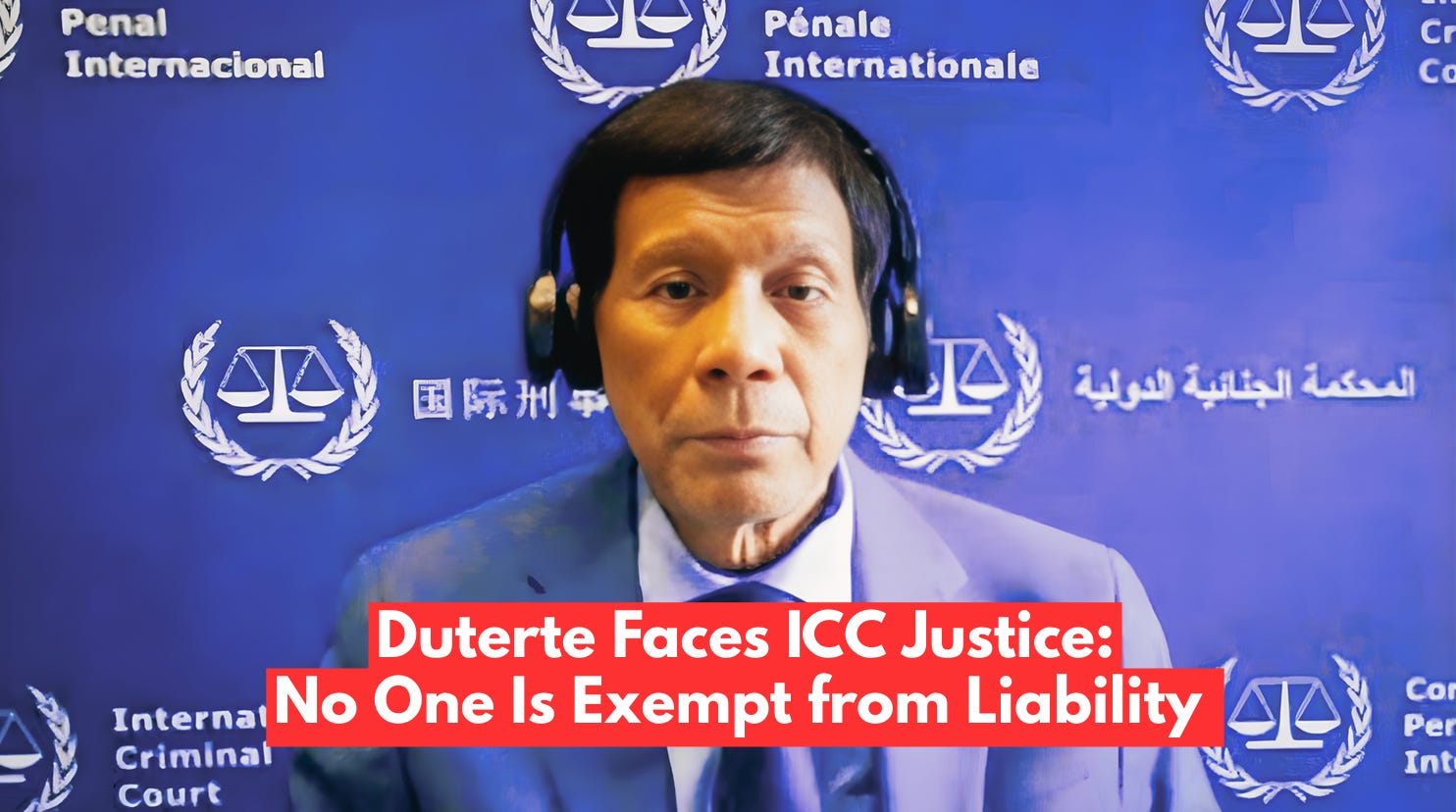
THE International Criminal Court could add more victims and incidents in the case against Rodrigo Duterte if the charges against the former Philippine president are confirmed during the “confirmation of charges” hearings in The Hague next week.
In a primer on the “crimes against humanity” case against Duterte published this week, Human Rights Watch noted that no individual is exempt from liability regardless of their official position. The ICC’s prosecutor maintains the authority to target other officials in positions of command who failed to prevent or report abuses.
“The Office of the Prosecutor has indicated that the specific incidents outlined in the document containing the charges are ‘a non-exhaustive list of examples of the conduct underlying the charge,’ and that the 78 victims included in the document ‘are a non-exhaustive list of victims in this case’,” HRW pointed out in the primer.
“The ICC case reflects the determination of victims and their families to advance justice against all odds and dangers,” said Maria Elena Vignoli, senior international justice counsel at HRW in a statement released alongside the primer.
Last week, the ICC’s Pre-Trial Chamber 1 that is handling the case disclosed the identities of eight more of Duterte’s alleged “co-perpetrators,” which include two sitting senators, one former justice secretary, and several top-ranking law enforcement officials.
The ICC is set to begin a landmark “confirmation of charges” hearing against Duterte the week of Feb. 23. He faces three counts of the crime against humanity of murder. The prosecutor alleges that Duterte bears criminal responsibility for these acts — having indirectly committed, ordered, instigated, or aided them — through his control over law enforcement and the “Davao Death Squad.”
If the pretrial chamber finds “substantial grounds to believe” that Duterte committed these crimes, the case will proceed to a full trial, though the prosecution may still submit additional evidence if the charges are initially rejected. The chamber has 60 days after the hearings to rule whether to proceed to trial.
The charges against the former president stem from a nationwide “war on drugs” initiated in 2016, which resulted in thousands of summary killings, primarily among the urban poor. While the Philippine government reported 6,252 deaths during official operations, the United Nations has calculated a death toll of at least 8,663, and domestic human rights groups suggest the real number may be triple that.
The specific incidents cited by the ICC include 19 murders in Davao City while Duterte was mayor and 45 murders or attempted murders during clearance operations during his presidency.
Duterte was arrested in Manila on March 11, 2025, following an ICC warrant, and has remained in detention in The Hague after his requests for interim release were denied.
Although his defense team attempted to postpone the proceedings by claiming he suffered from “cognitive impairment in multiple domains,” a panel of independent medical experts determined he was fit to participate in the hearings. To accommodate his health, the court has ordered shorter daily sessions and frequent breaks.
The proceedings hold significant weight for the 539 victims authorized to participate, who will be represented by legal counsel to ensure their concerns are heard. While the Philippines officially withdrew from the Rome Statute in 2019, the ICC maintains jurisdiction because the preliminary examination began before the withdrawal took effect.
HRW and other human rights groups have called on the current administration of President Ferdinand Marcos Jr. to also take action, especially because more than 1,000 people have died in drug-related killings since Marcos took office in 2022, according to the monitoring of DahasPH of the UP Third World Studies Center. Marcos has not rescinded Duterte’s drug war orders or formally repudiate the policy.
To demonstrate a commitment to justice, HRW said Marcos should formally end the “drug war,” order investigations into implicated officials, provide support to victims’ families, and begin the process of rejoining the Rome Statute.
“The ICC’s proceedings against Duterte should push Marcos to break with the past, distance himself from his predecessor’s bloody policies, and promote justice and the rule of law,” Vignoli said. “He should publicly declare an end to the ‘drug war,’ order credible investigations of those responsible for abuses, and take steps to rejoin the ICC.” (Rights Report Philippines)
This story is free for republication or reposting as long as proper attribution or credit is given to Rights Report Philippines.