


By Carlos Conde
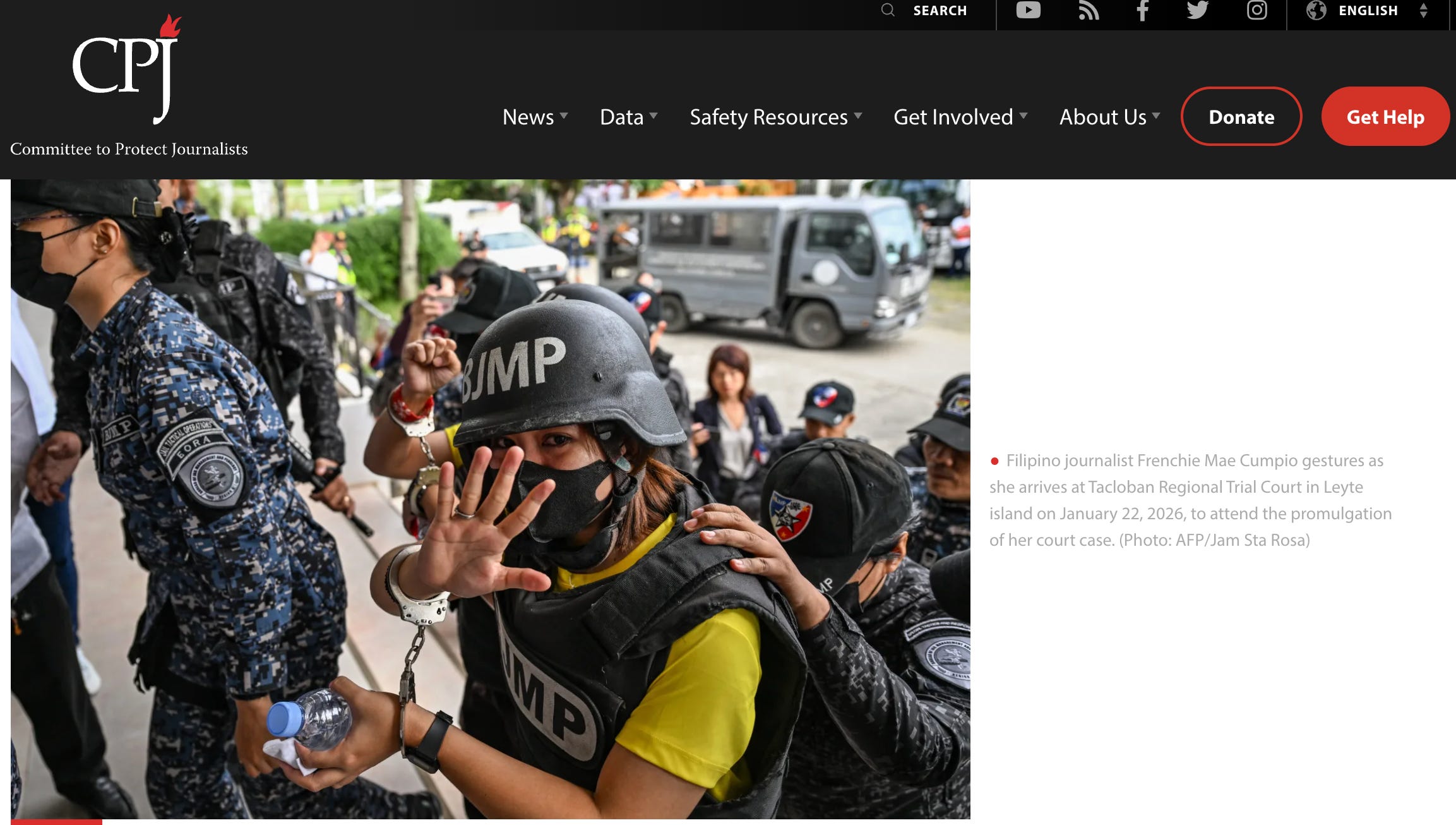
Yesterday’s court conviction of Frenchie Mae Cumpio and Mariel Domequil has surprised many, especially since she was acquitted of other related charges and, earlier, an appeals court junked the civil forfeiture case against her because the government failed to link the cash earlier seized from her to terrorism activities. But seen in a wider political context, the conviction is less an anomaly than part of a deliberate state strategy. It may seem absurd, as some media groups view it, but it totally makes sense in this context.
For years, the Philippine government has made going after “terrorism financing” a key pillar of its counter-insurgency campaign. Going after activists, NGOs, journalists, and community groups by tagging them as terror financiers is not only about weakening the communist movement. It is also about projecting to the international financial community that the Philippines is tough, credible, and compliant in policing money flows linked to terrorism.
This matters because Manila is desperate to maintain good standing with global watchdogs (such as the Financial Action Task Force) and reassure foreign banks, lenders, and investors. Being seen as “soft” on terrorism financing risks renewed gray-listing, higher transaction costs, reduced capital inflows, and a damaged investment climate.
So court convictions like this serve a dual purpose: They reinforce the narrative that dissent overlaps with terrorism, and they signal to foreign financial institutions that the Marcos government is serious about enforcement. In that sense, her case is not just about her. It’s about reputation management, financial legitimacy, and preserving access to global capital, no matter the human cost.
—-